
An alumni study ends with a report. That’s where its value is supposed to begin, and too often it’s also where the value ends.
Most writing about impact evidence, including ours, argues that research organizations should get better evidence. Much less is said about what to do with it once it arrives. Yet a report that sits in a shared drive does nothing for a funding case. It has cost you time and money and produced nothing in return.
A report nobody uses
One research organization I spoke with produced a training report covering five years of its programs. It was a solid piece of work. Then the data went untouched for five years.

When the next reporting cycle came around, nobody could pick up where the last study left off. The person who had done the work had moved on, and the method hadn’t been written down. The alumni list had to be rebuilt by hand.
Nothing was wrong with the analysis. What went wrong is that nobody planned how the report would be used or how its data would be kept.
Start with the audience, not the document
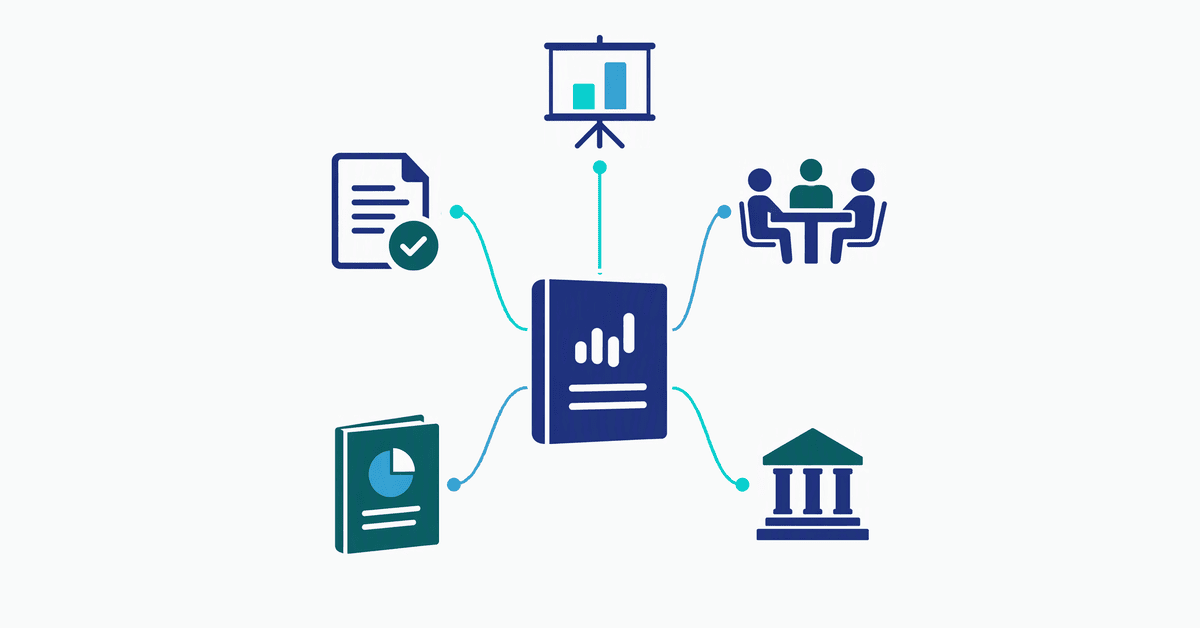
A study report is a source, not a finished message. Funders, boards, conference audiences, the public and government each need a different cut of the same evidence. Here are five places to put it to work.
1. In a funding proposal
The proposals that need your evidence aren’t always your own. Your organization may be applying for operating or renewal funding. Researchers in your community may also be leading proposals for new infrastructure that will be located at, or operated by, your organization. Their reviewers will ask about training too. You can strengthen those proposals by giving the applicants good data to use.
That support can matter. A researcher leading a proposal for new infrastructure drew on an alumni study of a national facility’s student and postdoc users. The funding review committee recognized the track record of training highly qualified personnel, captured and quantified in that study, as a strength of the proposal, which went on to receive full funding for a $37M project.
Whoever is applying, reviewers read many proposals, and most make the same claim about training talented people. A number with a comparison attached makes yours stand out.
Lead with that comparison, not the headcount. A useful structure for the section:
- The claim: what you set out to do for the people you train.
- The evidence: one or two benchmarked findings. For example: alumni reached executive roles at nearly five times the rate of a matched group of peers (7.4% vs 1.6%).
- The method, in one sentence: who was compared with whom (same fields, same degree levels, same years).
- One alumnus’s testimony, in their own words, about what they learned through your organization or the research activity you enabled, that illustrates the observed result.
Include the measures where results were modest. A finding where your alumni matched their peers shows that the comparison was honest, and that makes the strong findings easier to believe.
2. In a presentation to funders
Numbers make a case credible. Stories make it memorable. Neither does the job alone.
One organization presented its study findings alongside alumni describing their own career journeys. It secured its funding renewal with a seven-figure annual increase above its original request, and it credited that evidence-backed message as central to the outcome.
The structure is simple: show the comparison, then let one or two alumni explain what it looked like from the inside.
3. In the slides you present everywhere
Heads of research organizations present constantly: at conferences, partner meetings, board meetings and visits from officials. Most have a standard deck about what the organization does and why it matters. It covers the research, the facilities and the partnerships. Talent development, if it appears at all, is usually a headcount or a line on another slide.
Give it a slide of its own:
- A title that states the finding, not the topic. For example, “Our alumni reach executive roles at nearly five times the rate of their peers,” not “Training.”
- One chart showing your alumni beside the comparison group.
- One short quote from an alumnus, used with their permission.
Then use it every time you present. A proposal reaches one panel once. A standard slide reaches every audience you speak to, including peers who may later sit on review panels. It also makes talent development part of how your organization describes itself, not an afterthought.
4. In your annual report and public reporting
Public money brings a public audience. An annual report is the place to show accountability in plain language.
Keep it to one chart and one sentence per finding, plus a single line explaining what the comparison group is. Readers don’t need the method. They need to see that you checked your claims against something.
5. In a government relations briefing
Officials need a sentence they can repeat in a meeting you won’t be in. Pick the one finding that speaks most directly to their priorities, such as where your alumni work, whether they stayed in-country, or how far they’ve advanced, and state it with its comparison.
One page is enough, and one number with context is better than five without it.
Use it inside the organization, too
The same evidence can guide your own decisions. If your alumni list records how people engaged with you (program, facility, mode or frequency), outcomes can be compared across those groups. That shows which activities appear to make the most difference, which is useful whether or not a funder ever asks.
Keep the evidence alive
A study is most valuable when the next one can build on it. Before the report is filed:
- Write down the method: who counted as an alumnus, how the comparison group was defined, and which measures were used.
- Keep the alumni list current, and store it securely in line with your privacy obligations.
- Choose one metric to update every year. Pick the measure that matters most to your funders, such as in-country retention or the share of alumni in research-intensive sectors, and refresh it annually using the same definitions. A yearly figure is ready for annual reports and funder updates. It shows whether results hold as new cohorts move through your programs. It also keeps the list and the method in use, so the next full study builds on recent work instead of starting over.
- Decide who owns the responsibility for the evidence, so it doesn’t depend on one person staying in their role.
- Put the next study on the calendar, timed to your funding cycle and starting at least a year before any expected deadline. That leaves time for privacy review, procurement and the study itself, so the work can be done properly rather than rushed.
A short checklist
When the report arrives, ask:
- Who needs to understand our impact on talent, and which finding speaks most directly to each of them?
- Where will this evidence work for us: our own proposals and those led by our research community, funder presentations, our standard slides, annual and public reports, government briefings, and our own planning?
- Do we have alumni willing to speak alongside the numbers?
- Who owns the data and the method from here?
- Which metric will we update each year?
- When will we start the next study?
Evidence of talent impact takes months to build. It’s worth more than one appearance.
At Alumni Analyzer, our reports are built to be used: a presentation-style deck with clear figures and summary statements ready to share with funders and other stakeholders. If you’d like to talk about what that could look like for your organization, book a free consultation at alumnianalyzer.com.